Short answer: a reagent’s certificate describes the day it was released. What decides whether it still meets that specification is how it has been stored since — temperature, light, humidity, and what is standing next to it on the shelf.
Three rules cover most of it: segregate by hazard class, not alphabetically; write the date on every bottle when it is opened; and in a tropical climate, treat humidity as the primary enemy of anything hygroscopic.
This guide sits under the analytical reagent grades guide. The authoritative document for any individual reagent is its safety data sheet, which is supplied with the product and always takes precedence over general guidance.
Alphabetical storage is the classic mistake
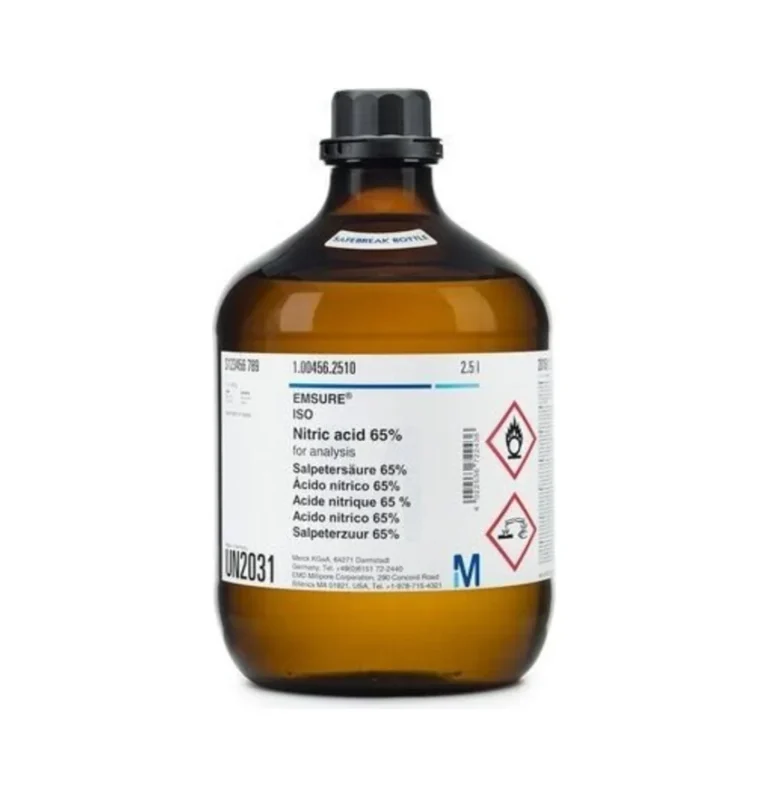
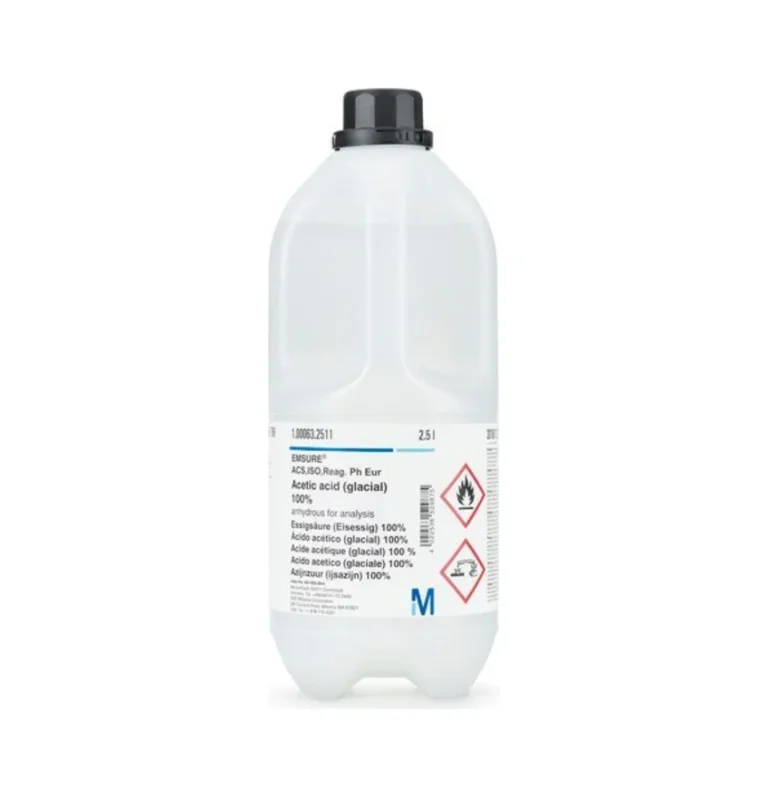
Shelving reagents by name puts incompatible chemistry side by side. The catalogue here contains a clean example of why that matters: nitric acid 65% and glacial acetic acid are both acids, both liquids, both routine. Nitric acid is also a strong oxidiser, and an oxidiser stored with an organic acid or an organic solvent is a fire and a violent reaction waiting for a broken bottle.
Segregate by hazard class instead, with physical separation — a different cabinet, or at minimum a separate bunded tray:
| Class | Examples here | Store | Keep away from |
|---|---|---|---|
| Oxidising acids | Nitric acid 65% | Vented acid cabinet, own tray | Organic solvents, organic acids, bases, metals |
| Organic acids | Acetic acid glacial | Acid cabinet, separate tray | Oxidisers, bases |
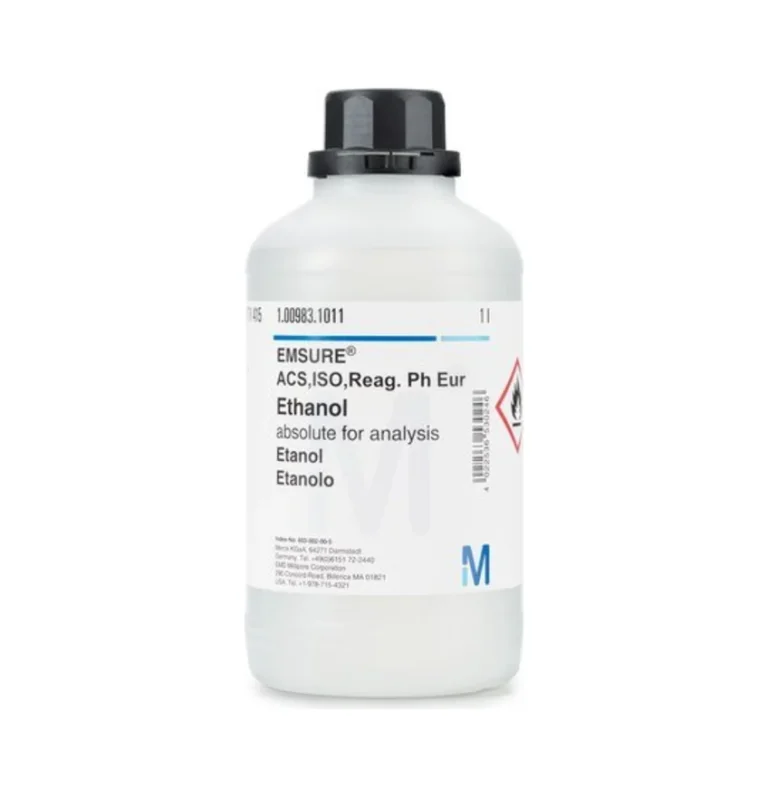
| Flammable solvents | Methanol, ethanol absolute, acetonitrile, isooctane | Flammables cabinet, away from ignition sources | Oxidisers, heat, sunlight |
| Bases | Hydroxide solutions and solids | Separate cabinet, closed containers | Acids, glass with ground joints left assembled |
| Certified standards | Certipur, Titripur lines | Cool, dark, undisturbed, stock rotated | Anything that generates fumes |
Humidity is the tropical problem
Guidance written for temperate laboratories underplays this. In Jakarta, ambient humidity sits high most of the year, and that changes what “room temperature storage” means in practice.
- Hygroscopic liquids — absolute ethanol, methanol, acetonitrile — take up atmospheric water every time the bottle is open. A solvent bought at ≤0.1% water does not stay there in a bottle opened twice a day in an unconditioned room.
- Hygroscopic solids cake, gain weight, and give a false low assay when weighed. Sodium hydroxide is the standard example: pellets left open take up both water and carbon dioxide.
- Labels and caps degrade faster. A label that has lifted or blurred takes the lot number with it, and an unidentifiable bottle is waste, not stock.
The practical answers are unglamorous: an air-conditioned or dehumidified store room, small pack sizes for anything hygroscopic that is used slowly, and a desiccator for solids that must stay dry between uses.
Sealed shelf life and open shelf life are different numbers
Manufacturers state a retest or expiry date for the unopened container. The moment the seal is broken, a second and usually shorter clock starts, and it is not printed anywhere.
The fix is a labelling discipline, applied without exception:
- Date of receipt on the bottle when it enters the store.
- Date of opening written on the bottle the first time it is used.
- Initials of whoever opened it, so questions have someone to go to.
- Stock rotation — oldest sealed bottle to the front, and nobody opens a new one while an in-date open bottle exists.
Anything reformulated in-house — a diluted acid, a buffer, a working standard — needs a preparation date and a stated expiry that your quality system defines, not the manufacturer.
Volumetric solutions drift while nothing appears to change
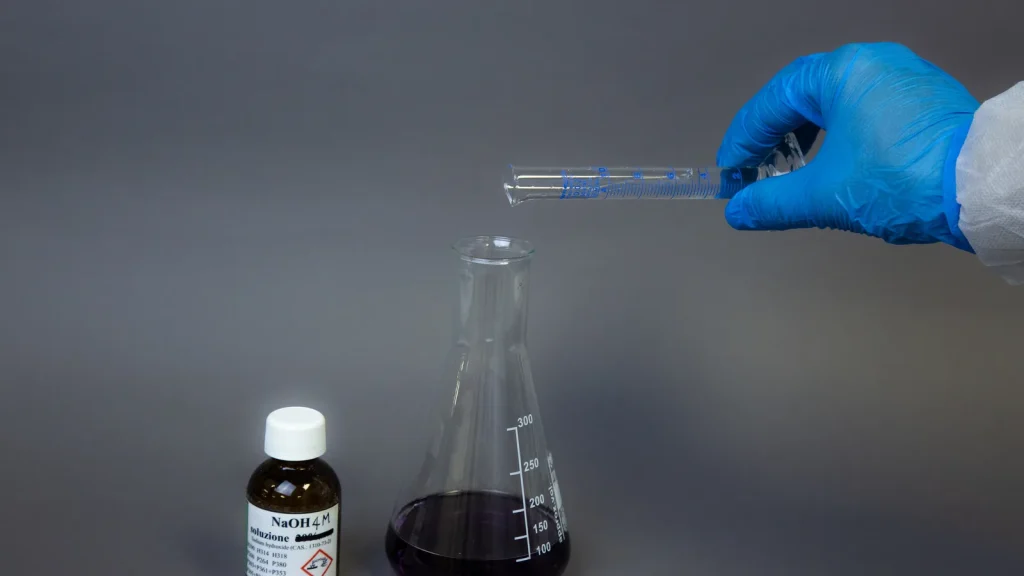
A titrant is the reagent most likely to be wrong without looking wrong. Sodium hydroxide solution absorbs carbon dioxide from air continuously, and its concentration falls; the bottle looks identical throughout.
Where a titre feeds a reported result, either restandardise on a defined schedule or work from a factory-certified Titripur solution and keep the bottle closed between uses. The same applies to every certified standard on the shelf, which the calibration standards guide covers in full. Whichever route you take, write the decision down — an assessor will ask how you know the titrant’s concentration on the day of the analysis, and “it was certified when it arrived” is only an answer for a bottle that is still sealed.
Most reagent problems we are asked to look at are not quality problems at delivery. They are storage problems that took four months to show up in a result.
PT Praglas Raya technical team
Light, heat and the container itself
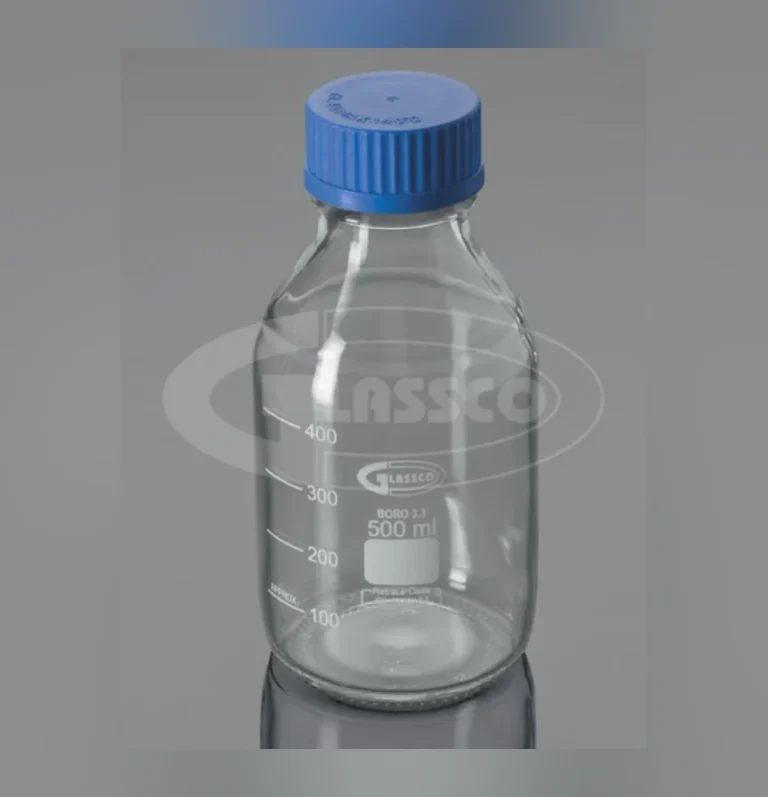
Light-sensitive reagents are supplied in amber glass for a reason, and the reason survives decanting into a clear bottle only in the sense that the reagent then degrades. If a reagent must be split, split it into the same kind of container — the reagent bottle guide covers which material to split it into.
Two more container rules worth enforcing:
- Never return decanted material to the stock bottle. Whatever it picked up in the beaker now belongs to the whole bottle, and to every result that bottle supports afterwards.
- Do not store reagents in volumetric glassware. A Class A volumetric flask holding a hydroxide solution for a week is a flask that has lost its calibration — the alkali etches the neck around the graduation mark. Store in a reagent bottle, measure in the flask.
A quarterly stock check that takes an hour
| Observation | What it indicates | Action |
|---|---|---|
| Crystals around a cap | Evaporation and creep; seal failing | Clean, reseal, check the closure type |
| Discolouration in a clear solvent | Oxidation or light exposure | Withdraw from analytical use |
| Caked or damp solid | Moisture ingress | Dry and reassay, or discard |
| Bulging or deformed plastic bottle | Pressure build-up or solvent attack | Vent in a fume hood, transfer |
| Illegible label or missing lot number | Traceability lost | Dispose — it cannot support a result |
| Open bottle with no opening date | Labelling discipline has slipped | Date it now, retrain, tighten the check |
Frequently asked questions
How long does an opened bottle of solvent last?
There is no universal figure — it depends on the solvent, the closure, how often it is opened and the humidity of the room. What matters is that your laboratory sets a limit, writes the opening date on the bottle, and applies the limit consistently. Hygroscopic solvents used for water-sensitive work deserve the shortest limits.
Can I store nitric acid with other acids?
Not with organic acids such as glacial acetic acid, and not with organic solvents. Nitric acid is a strong oxidiser; store it separately from anything it can oxidise, in its own tray inside a vented acid cabinet.
Do reagents expire?
Most carry a retest date rather than a true expiry: after that date the manufacturer no longer warrants the specification without re-testing. Some materials genuinely degrade — peroxide-forming solvents and light-sensitive reagents among them — and those dates should be treated as hard limits.
Is air conditioning necessary for a reagent store in Indonesia?
For anything hygroscopic, for certified standards and for volumetric solutions, yes — ambient humidity here is high enough to change results over months. A dehumidified, temperature-stable store room is the cheapest analytical improvement most laboratories can make.
Can I keep a working standard in a volumetric flask?
For the working session, yes. For storage, no — transfer it to a reagent bottle. Long contact with alkaline or aggressive solutions attacks the neck of the flask and moves its calibration, and a stoppered flask is not a storage closure.
Sources and further reading
- The safety data sheet supplied with each reagent — the authoritative source for storage, incompatibility and handling of that specific product
- ISO 6353-1:1982 — Reagents for chemical analysis: General test methods
- ISO 4787:2021 — Laboratory glass and plastic ware: Volumetric instruments, methods for testing of capacity and for use
- ISO 3585:1998 — Borosilicate glass 3.3: Properties
Reagent examples are drawn from the Merck lines stocked by PT Praglas Raya. Browse analytical reagents and reagent bottles, read the certifications guide, or talk to our technical team about setting up a reagent store.