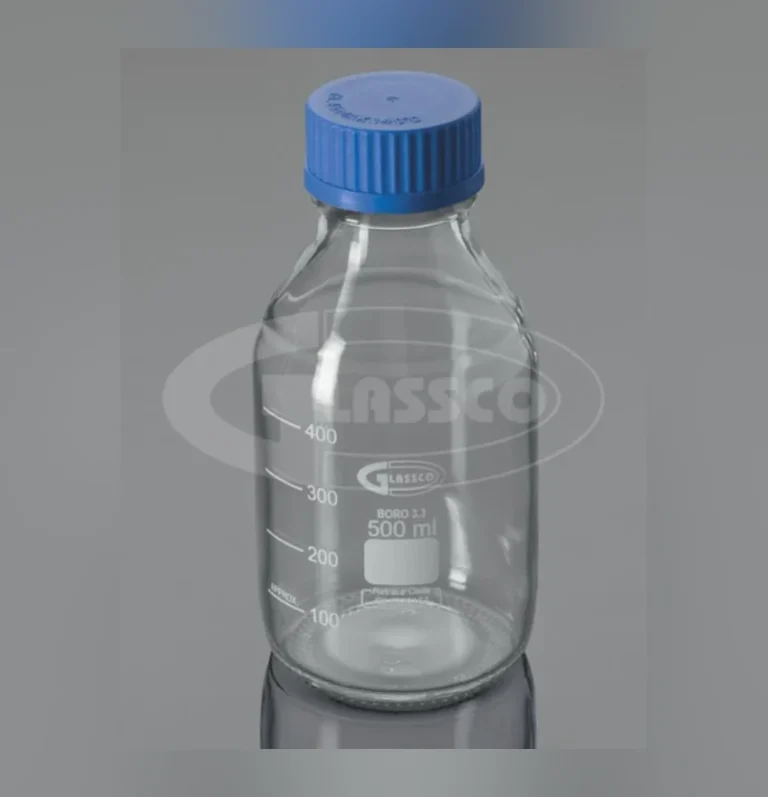
Short answer: store in borosilicate 3.3 with a screw neck by default — it is inert, transparent, autoclavable and holds its contents unchanged for years. Switch to polypropylene for hydrofluoric acid, strong alkali, fieldwork and anywhere a dropped bottle is likely.
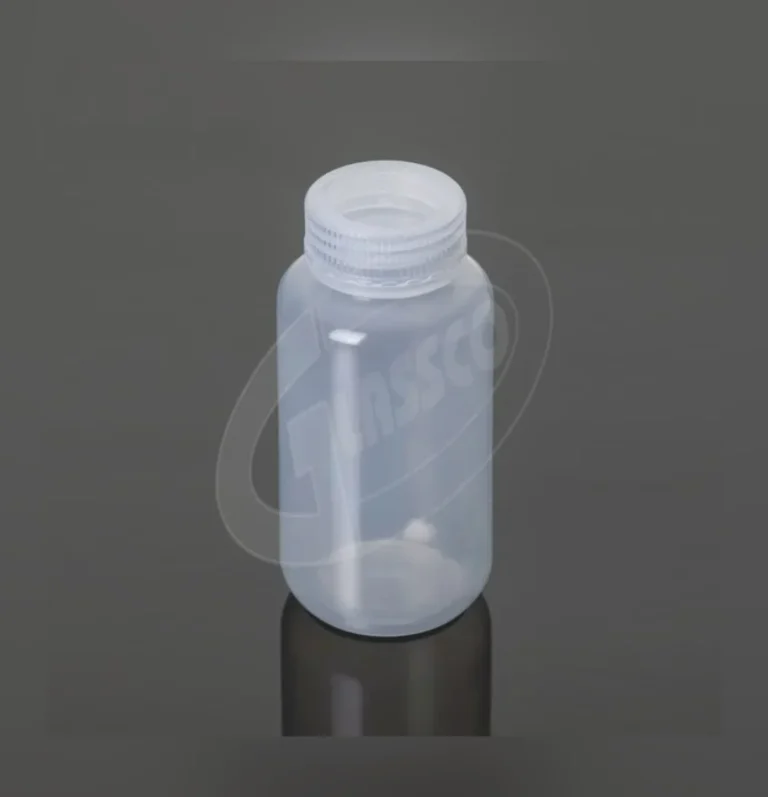
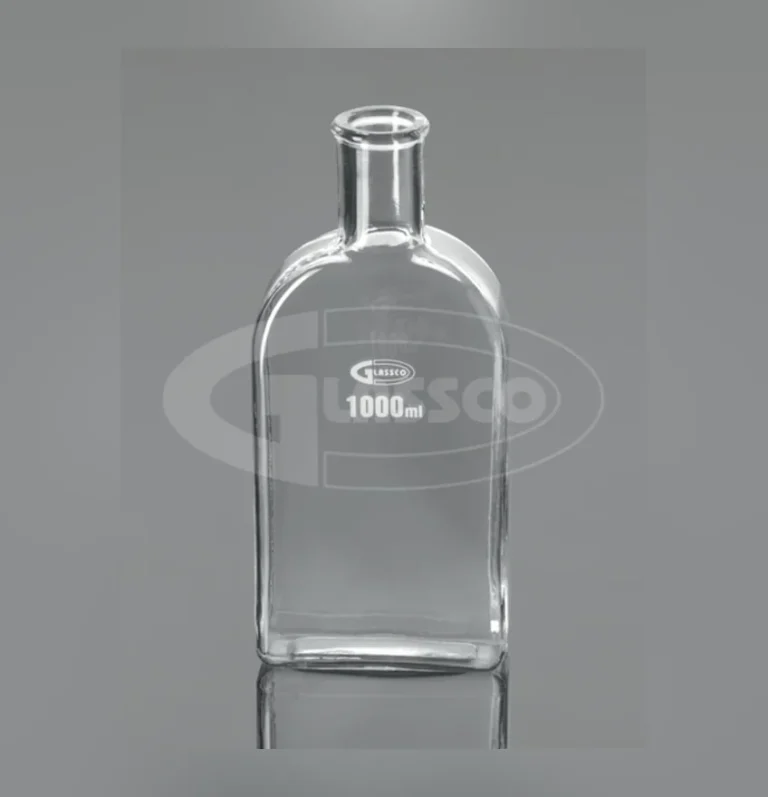
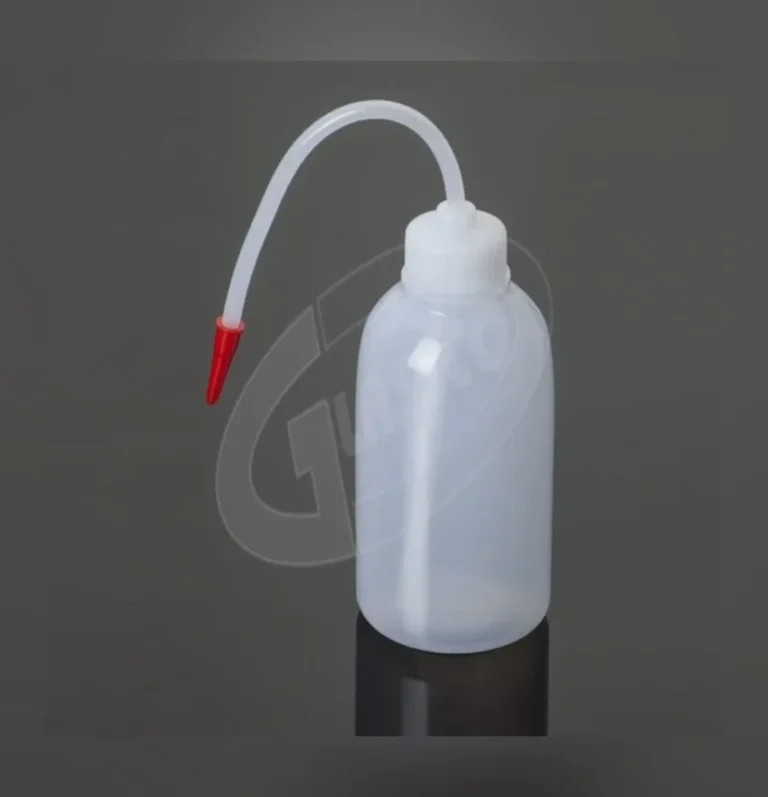
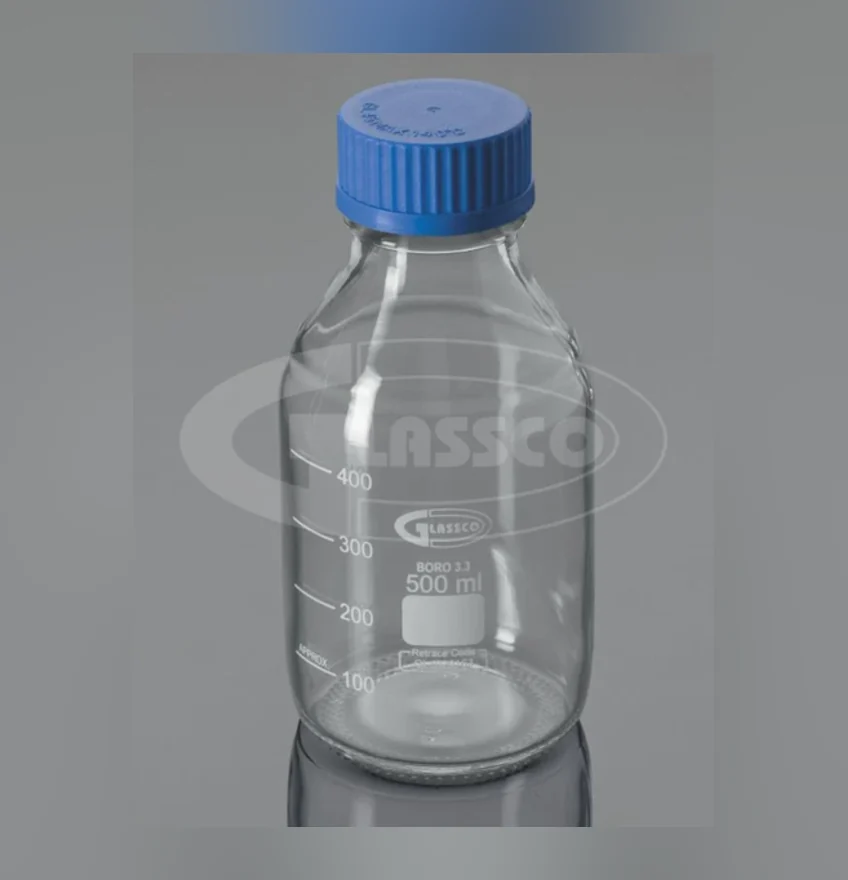
The glass range runs from 10 ml to 20 litres in eleven sizes. The plastic range covers 30 ml to 1 litre and is rated to 120 °C.
A reagent bottle is the least examined item in most stores, and the one that quietly decides whether a certified reagent still meets its specification six months later. This guide sits alongside the reagent storage guide, which covers what happens inside the bottle.
The two ranges
| Glass, screw neck | Plastic, wide mouth | |
|---|---|---|
| Material | Borosilicate 3.3, PP screw cap | Polypropylene |
| Sizes | 10, 25, 50, 100, 250, 500, 1000, 2000, 5000, 10000, 20000 ml | 30, 60, 125, 250, 500, 1000 ml |
| Temperature | Autoclavable; glass withstands high temperature | Rated to 120 °C |
| Attacked by | Hydrofluoric acid, hot phosphoric acid, strong hot alkali | Many organic solvents (swelling, crazing) |
| Sees the contents | Yes | Translucent at best |
Note the size overlap: between 30 ml and 1000 ml you can have either. That is the range where the decision actually has to be made, and it is made on chemistry, not on price.
Narrow neck or wide mouth
The glass range is a screw-neck pattern; the plastic range is wide mouth. They are not interchangeable habits.
- Narrow neck — pours in a controlled stream, presents less surface to the air when open, and loses less to evaporation. Right for liquids, for anything hygroscopic, for anything that will be poured into a cylinder or a flask.
- Wide mouth — takes a spatula, a scoop or a solid sample without a funnel, and is far easier to clean. Right for powders, for viscous material, and for anything that has to be sampled repeatedly.
The rule that survives contact with a real bench: liquids go in narrow necks, solids go in wide mouths, and a bottle that has to do both is doing one of them badly.
Sizing the bottle to the contents, not to the shelf
The most common storage fault is a large bottle half empty. Headspace is air, air carries water and oxygen, and both act on the reagent every hour it sits there.
| How fast it is used | Buy | Because |
|---|---|---|
| A working solution used within a week | Smallest bottle that holds one week | Headspace never gets a chance to matter |
| A stock solution used over months | Several small bottles, not one large | Only the bottle in use is exposed |
| Bulk reagent decanted into working bottles | Large glass for stock, small for daily use | The stock bottle is opened rarely |
| Anything hygroscopic | Smallest practical size | Every opening admits humid air |
Buying the 5 litre bottle because the price per litre is better is a real saving right up to the point where the last two litres have to be discarded.
PT Praglas Raya technical team
The cap is part of the specification
The glass bottles ship with a polypropylene screw cap. Three things follow from that:
- The cap sets the temperature limit, not the glass. Remove or loosen it before autoclaving, and never assume the closure matches the bottle’s thermal rating.
- Solvents attack liners. A cap that has softened, swollen or gone tacky is no longer sealing, and the material it has lost has gone into your reagent.
- A cracked or cross-threaded cap is a failed bottle. Replace the closure, not just the label.
Light, labels and traceability
Clear glass shows you the contents and offers no protection from light. Light-sensitive reagents are supplied in amber for a reason, and decanting one into a clear bottle undoes that in a week on a sunny bench. Where amber is not available, store the clear bottle in a closed cupboard and treat the exposure as a shelf-life question.
Every storage bottle needs the same five things written on it, and a bottle missing any of them cannot support a reported result:
- Substance and concentration
- Lot number, or the preparation record reference for anything made in-house
- Date received, and date opened
- Expiry or retest date
- The initials of whoever filled or opened it
The certifications guide covers why the lot number is the field that matters most.
Frequently asked questions
Should I store reagents in glass or plastic bottles?
Glass by default — it is inert, transparent and does not contribute anything to the contents. Plastic where the chemistry attacks glass, meaning hydrofluoric acid and strong alkali, and where breakage is the bigger risk.
Can I store a solution in a volumetric flask?
Not beyond the working session. A ground stopper is not a storage closure, and alkaline solutions attack the neck of the flask around the graduation mark, which moves its calibration. Transfer to a reagent bottle.
What size reagent bottle should I buy?
The smallest that covers your consumption between openings. A half-empty bottle is a bottle full of humid air, and for hygroscopic reagents that is the main route to a failed specification.
Are these bottles autoclavable?
The borosilicate 3.3 body is. Loosen or remove the polypropylene cap first — a sealed bottle in an autoclave is a pressure vessel — and let the bottle cool in the chamber rather than in room air.
Can I reuse a reagent bottle for a different chemical?
Only after cleaning that you can justify, and never for trace analysis. Relabel completely: a bottle carrying two labels, or a scratched-out one, is the classic route to a contaminated result and a failed audit.
Sources and further reading
- The safety data sheet supplied with each reagent — the authoritative source for its storage and container requirements
- ISO 3585:1998 — Borosilicate glass 3.3: Properties
- ISO 6353-1:1982 — Reagents for chemical analysis: General test methods
Dimensions are taken from the specification tables on the product pages of this site. Browse reagent bottles and plasticware, read the storage guide, or talk to our technical team.