Short answer: most wrong deliveries start with an incomplete purchase request. For glassware, name the instrument, capacity, accuracy class, joint size, material and pack size. For reagents, name the substance, CAS number, grade, certification and pack code.
Those two lines are the difference between one delivery and three. Everything below explains why each field matters — and who we are, for readers meeting PT Praglas Raya for the first time.
PT Praglas Raya supplies laboratory glassware, analytical reagents, test kits and microbiology consumables to hospitals, universities, pharmacies, government institutions and industrial laboratories across Indonesia. The catalogue on this site carries 143 products across 28 categories from three brands: MERCK for reagents, GLASSCO for borosilicate glassware, and KDS.
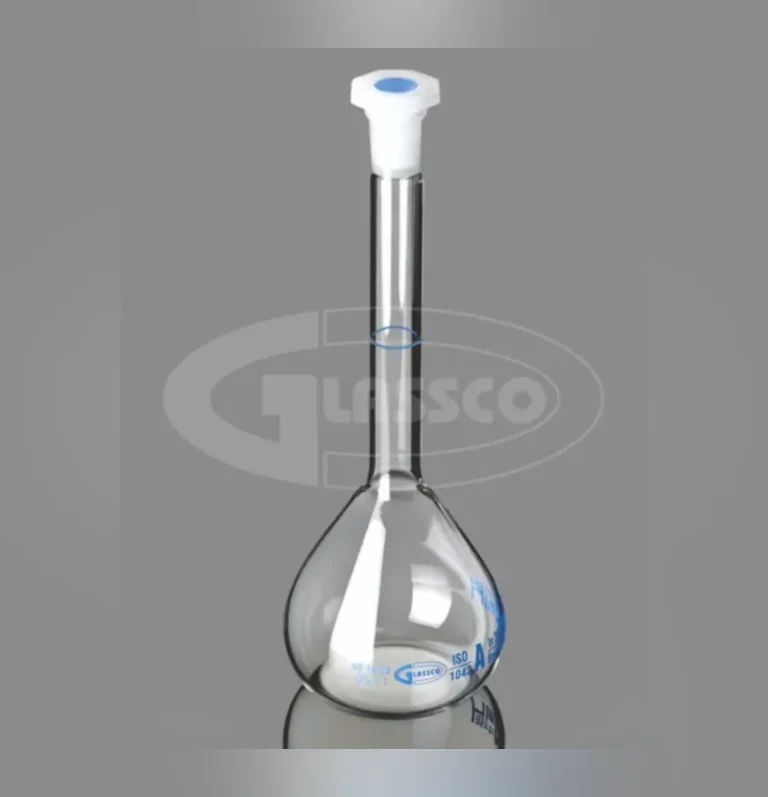
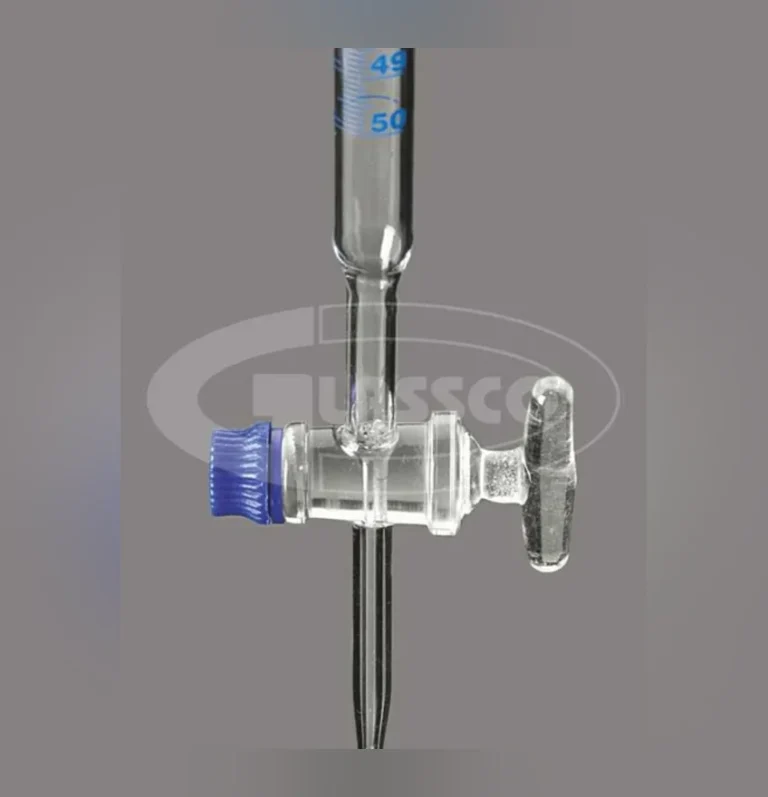
What a complete glassware specification looks like
Six fields. Miss one and the supplier has to guess.
| Field | Example | If omitted |
|---|---|---|
| Instrument | One-mark volumetric flask | A cylinder arrives where a flask was needed — five times the tolerance |
| Capacity | 100 ml | Nothing can be quoted |
| Accuracy class | Class A | Class B is supplied at twice the tolerance, correctly |
| Joint or neck | N/S 14/23 | Correct volume, stopper does not fit |
| Material | Borosilicate 3.3 | Plastic or soda-lime may be substituted |
| Pack size | Pack of 2 | Quantity confusion between pieces and packs |
Each of those fields has a guide behind it on this site: the accuracy class guide for A, AS and B, the joint size guide for the two numbers on a ground joint, and the borosilicate guide for what the material buys you.
What a complete reagent specification looks like
| Field | Example | If omitted |
|---|---|---|
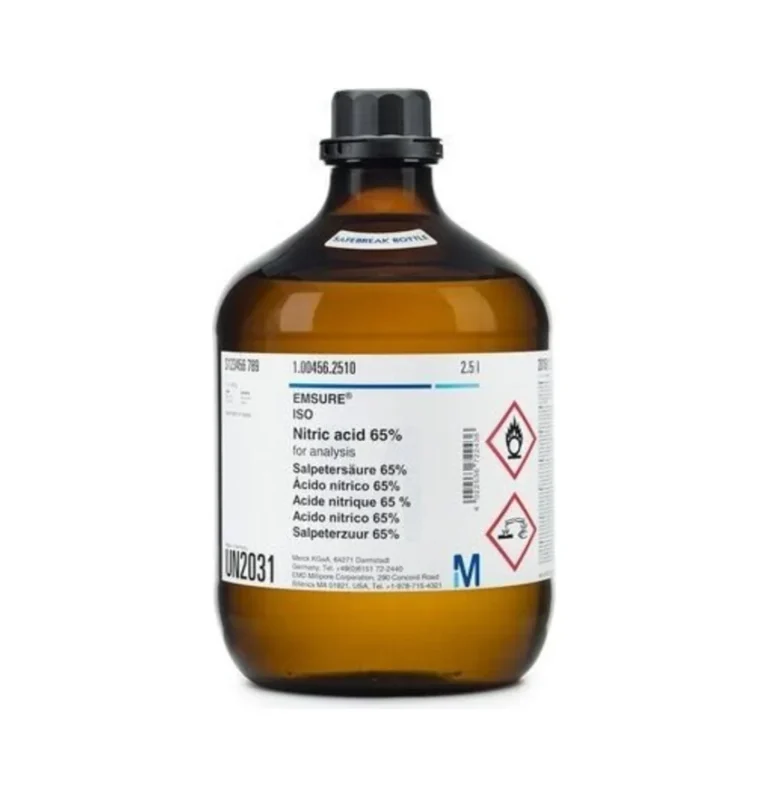
| Substance | Nitric acid 65% | Concentration ambiguity |
| CAS number | 7697-37-2 | Name collisions between hydrates, isomers and salts |
| Grade | EMSURE, for analysis | A technical grade may be supplied — correctly, and uselessly |
| Certification | Reag. Ph Eur, ISO | The batch may not satisfy the monograph your method references |
| Pack code and size | 1.00456.2500, 2.5 L | Wrong volume, wrong packaging, wrong price |
| Documentation needed | Lot-specific certificate of analysis | A typical-values sheet arrives instead, which is not evidence |
The reagent grades guide covers what EMSURE, LiChrosolv, Suprapur, Certipur and Titripur each control, and the certifications guide covers ACS, ISO, Ph. Eur. and USP.
How the catalogue is organised
Every product page carries the full manufacturer specification table — item codes, capacities, tolerances, joint sizes, pack quantities — rather than a marketing summary. That is deliberate: a specification table is what a procurement officer needs to raise a correct order, and what a laboratory needs to check that a delivery matches the request.
- Glassware — volumetric flasks, burettes, pipettes, measuring cylinders, conical and boiling flasks, beakers, condensers, desiccators, reagent bottles. Browse laboratory glassware.
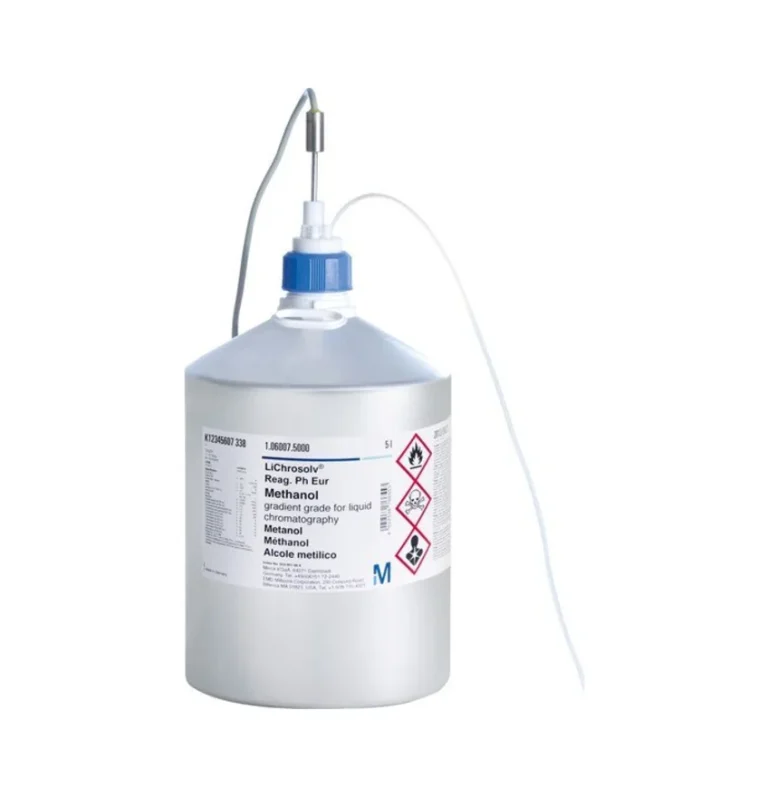
- Reagents — 88 lines under analytical reagents and 100 under pro analysis, including solvents, acids, salts and certified standards.
- Plasticware, microbiology and test kits — cylinders, beakers and bottles in PP and PE, petri dishes, tubes and field kits.
Two printed catalogues are also available as PDFs from the catalogue page: one for the glassware line and one for chemicals. Both are downloadable without registration.
Why there are no prices on the site
Laboratory supply is quote-based, and honest pricing depends on things a web page cannot know: quantity, pack format, current stock, delivery location and whether the order is a one-off or a standing requirement. Publishing a single figure would mean publishing a wrong one for most buyers.
Send the specification and the quantity, and a quote comes back against the exact item codes.
The requests that get answered fastest are the ones that include the method. Tell us what the reagent or the glassware has to do, and we can flag a mismatch before it becomes a delivery.
PT Praglas Raya technical team
How to order
- Find the item in the catalogue and note the item codes from its specification table. Codes are per row, so a 100 ml flask and a 250 ml flask are separate codes.
- Write the specification using the fields in the tables above.
- Say what it is for if the choice is not obvious — the method, the acceptance limit, the instrument it feeds. This is what lets us tell you when a cheaper class would do, or when the one you asked for will not.
- Send it through the contact page, by email to support@praglasraya.co.id, or by phone or WhatsApp on +62 811 1343 552. We work in Indonesian and English.
- Check the quote against the codes before approving. Item code, class, joint size and pack quantity are the four fields worth re-reading.
Where we are
PT Praglas Raya — also known as Praglass Raya — is based in Central Jakarta:
Jl. Bend. Jatiluhur No. 63, RT.1/RW.2, Bend. Hilir, Kec. Tanah Abang, Jakarta Pusat, DKI Jakarta 10210, Indonesia.
For lead times, minimum order quantities, delivery outside Jakarta and documentation requirements on tenders, ask when you send the specification — those depend on the item and the quantity, and we would rather answer them precisely than publish a number that turns out not to apply to your order.
The technical library on this site
These guides exist because the questions in them arrive over and over in procurement emails. They are written against the same specification tables the products carry, and they are free to use, quote and share.
- Glassware accuracy classes — Class A, AS and B compared across flasks, burettes, pipettes and cylinders, with real tolerance data.
- Analytical reagent grades — what EMSURE, LiChrosolv, Suprapur, Certipur and Titripur each guarantee.
Frequently asked questions
What information do you need to quote laboratory glassware?
Instrument, capacity, accuracy class, joint or neck size, material and pack size — plus quantity. If the item is already on your bench, the item code printed in the product’s specification table is faster than all six.
Do I need to give the CAS number when ordering a reagent?
It is the safest way to fix the identity of the substance, particularly where names are shared between hydrates, isomers or salts. Send the CAS number and the pack code together: one fixes what it is, the other fixes the grade and the size.
Can PT Praglas Raya supply against a written tender specification?
Send the specification and the documentation the tender requires. The catalogue is built around manufacturer specification tables precisely so that a line-by-line comparison against a tender is straightforward.
Are certificates of analysis available for reagents?
Say so in the request, and specify whether the method needs a lot-specific certificate or whether a typical-values sheet is acceptable. The distinction is explained in the certifications guide, and it is worth settling before the order rather than after.
Which brands does PT Praglas Raya carry?
MERCK for analytical reagents and certified standards, GLASSCO for borosilicate 3.3 laboratory glassware, and KDS. The current catalogue lists 143 products across 28 categories.
Get in touch
Browse the full catalogue of 143 laboratory products, download the glassware and chemical catalogues, or send us a specification. If you are not sure which class or grade your method needs, send the method — that is the question we are best placed to answer.