Short answer: Class A is the tightest tolerance an instrument is made to, individually adjusted and normally certificated. Class AS carries the same tolerance as Class A but adds a specified 30-second waiting time for draining instruments — burettes and pipettes. Class B is exactly twice the Class A tolerance for the same nominal capacity, on every instrument.
The class alone does not tell you the accuracy. A Class A measuring cylinder at 100 ml holds ±0.50 ml; a Class A volumetric flask at the same volume holds ±0.10 ml. Same class, five times the error.
Every piece of volumetric glassware in a laboratory carries a class marking, and almost every procurement argument about glassware is really an argument about which class is defensible. The classes are defined by ISO 384, which sets the design principles, and then by an instrument-specific standard that fixes the actual numbers.
This guide covers the class system across the whole volumetric range. Each instrument then has its own guide with the full specification tables.
The three classes, in one table
| Class | Tolerance | Adjustment | Documentation | Applies to |
|---|---|---|---|---|
| A | The reference limit for the instrument and capacity | Individually adjusted | Batch or individual certificate, traceable | All volumetric instruments |
| AS | Identical to Class A | Individually adjusted | Same as Class A | Draining instruments only — burettes, pipettes |
| B | Exactly twice the Class A limit | Batch tolerance | Usually none | All volumetric instruments |
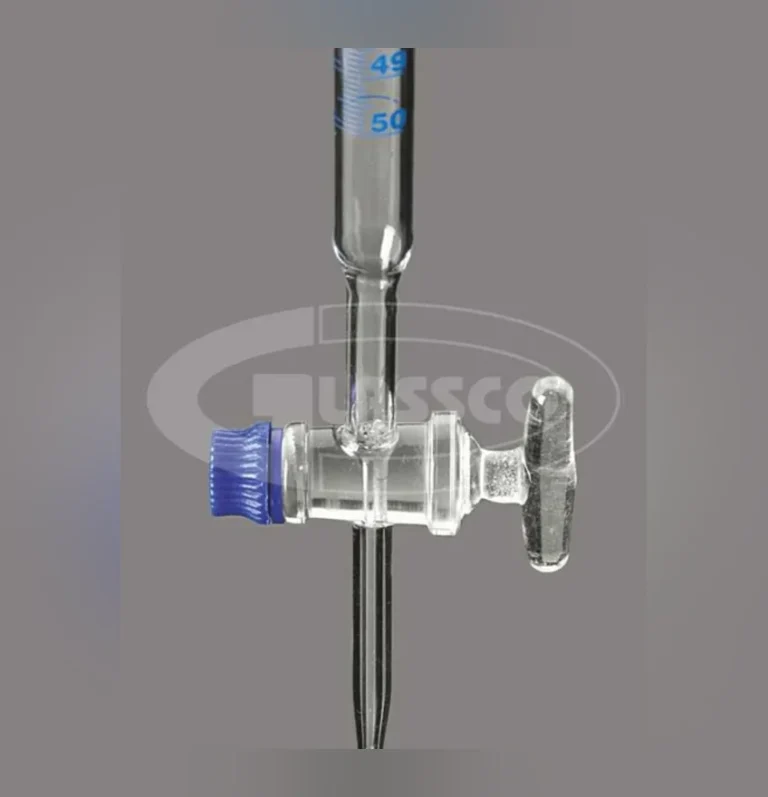
The AS designation confuses people more than the other two, because it is not an accuracy grade at all. Under ISO 385, a Class AS burette holds the same tolerance as Class A but is built to drain within a specified delivery time, with 30 seconds elapsing before the final meniscus reading. Class A specifies no waiting time. In practice AS is the grade you want for titration, because the wait is built into the method rather than left to the analyst’s judgement.
The same class means different accuracy on different instruments
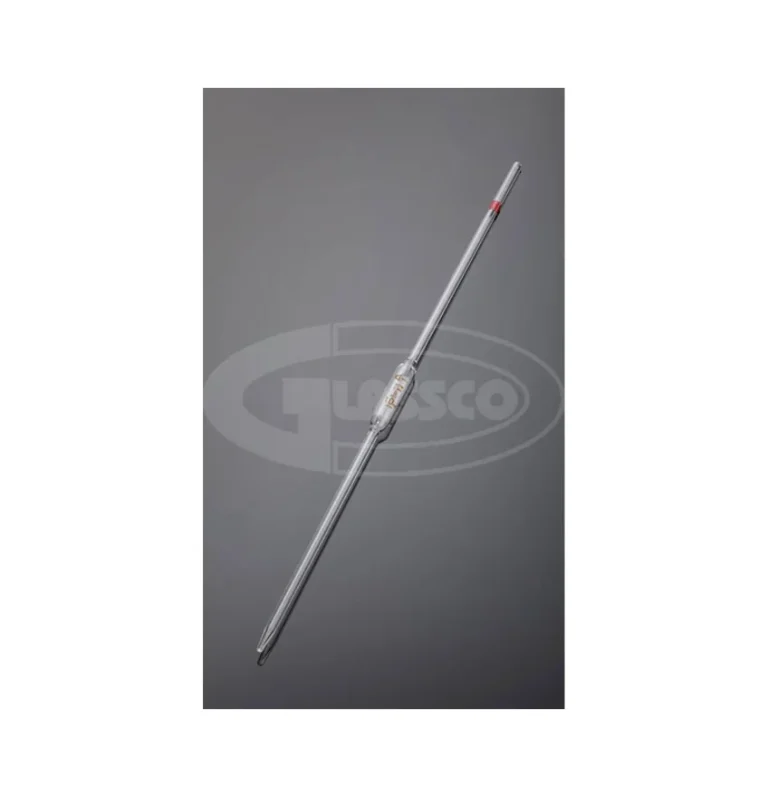
This is the point most selection guides skip. Class A is a promise about a specific instrument’s construction, not a universal accuracy figure. Below are the actual Class A and Class AS tolerances from the GLASSCO range PT Praglas Raya stocks, compared at the same nominal volumes.
| Instrument | 25 ml | Relative | 100 ml | Relative |
|---|---|---|---|---|
| One-mark volumetric pipette (AS) | ±0.030 ml | 0.12% | ±0.080 ml | 0.08% |
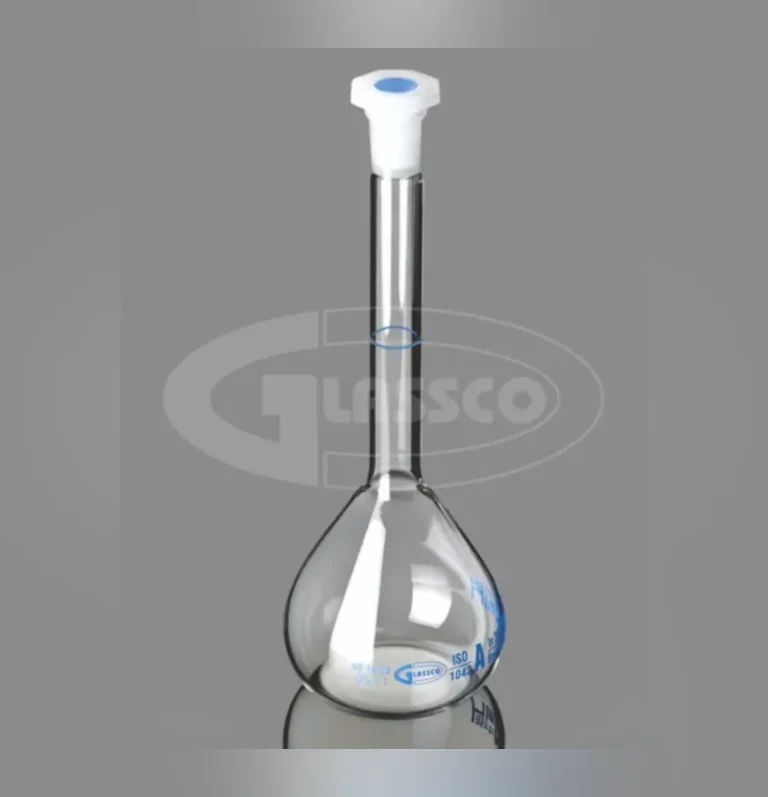
| One-mark volumetric flask (A) | ±0.040 ml | 0.16% | ±0.100 ml | 0.10% |
| Burette (AS) | ±0.05 ml | 0.20% | ±0.10 ml | 0.10% |
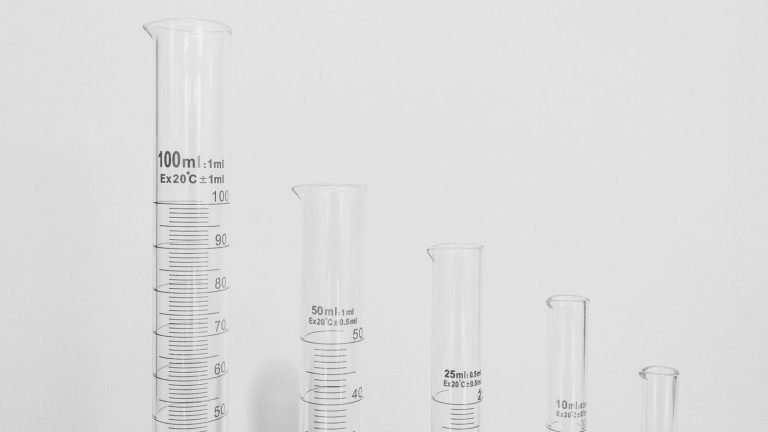
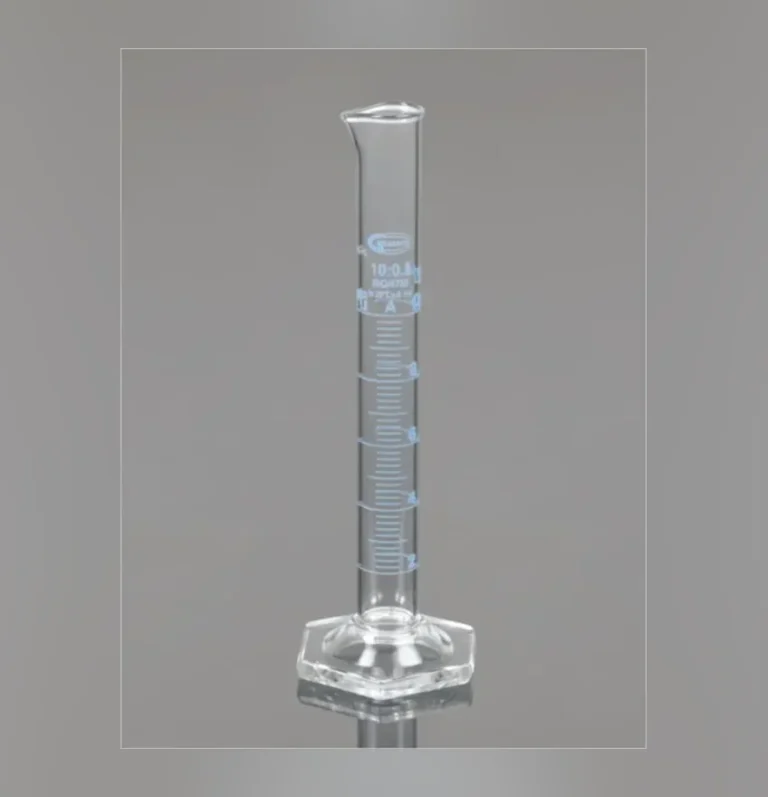
| Measuring cylinder (A) | ±0.25 ml | 1.00% | ±0.50 ml | 0.50% |
A Class A measuring cylinder is between five and eight times looser than a Class A flask of the same capacity. That is not a manufacturing shortfall — it is what a cylinder is for. A cylinder is a measuring instrument; a flask is a calibration instrument. Specifying “Class A” on a purchase order without naming the instrument tells the supplier almost nothing.
The most expensive mistake in glassware procurement is not buying Class B. It is buying Class A cylinders to prepare standards that should have been made in a flask.
PT Praglas Raya technical team
Guides by instrument
Each guide below carries the full capacity-by-capacity tolerance table for the instrument, a procurement decision table, and the verification method.
- Volumetric Flask Class A vs Class B — the 14-capacity tolerance table from 5 ml to 5000 ml, why small flasks are the weak link, and the N/S neck joint trap that causes most wrong orders.
- Burette Class AS vs Class B — what the class costs you as a percentage of titre, why division is not tolerance, and whether a Schellbach stripe or a PTFE key is worth paying for.
- Measuring Cylinder Class A vs Class B — the nine-capacity table, when a batch certificate earns its price, and the volumes at which a cylinder should not be used at all.
- Volumetric vs Graduated Pipettes — one mark against many, the full tolerance table for both patterns, colour band codes, and the volume below which glass is the wrong instrument.
- Erlenmeyer Flask Selection — narrow against wide neck at every capacity, screw cap against ground stopper, and why the moulded graduations carry no class at all.
Two further guides cover what sits underneath the class system: ground glass joint sizes, which decides whether two pieces of glass connect at all, and borosilicate 3.3 against soda-lime glass, which decides what the glass survives. On the reagent side of the catalogue, the analytical reagent grades guide does the same job this page does for glassware.
The specification tables on each product page carry the same data: browse laboratory glassware, pipettes, burettes, measuring cylinders and laboratory flasks.
How to decide, in one rule
Take the acceptance limit of your method. The glassware’s own contribution should sit at or below one tenth of it. If your assay must land within ±1.0%, glassware contributing ±0.10% is invisible in the result; glassware contributing ±0.5% has eaten half your budget before the instrument is switched on.
Run that test against the table above and the answers fall out:
- Analytical standards, calibration curves, pharmacopoeial assays — Class A flask, Class AS pipette, Class AS burette. No exceptions, and keep the certificates.
- Routine QC where the method tolerance is 1% or wider — Class B flask and burette are defensible if you have written the justification down.
- Reagent make-up, buffers, rinse volumes, teaching — Class B throughout, and a cylinder rather than a flask wherever the volume is not critical.
- Anything an auditor will ask about — the class is not the answer on its own. The certificate is.
What the certificate does and does not say
Class A glassware is normally supplied with a batch certificate: a statement that a sample from the production batch was verified against a traceable standard. It is not the same as an individual certificate, which records the measured capacity of the one item in your hand and costs considerably more.
For most accredited laboratories a batch certificate plus in-house verification is the accepted position. The verification method is gravimetric and specified in ISO 4787: weigh empty, fill to the mark, weigh again, convert mass to volume at the measured temperature with the buoyancy correction applied, then compare against the tolerance for that capacity and class. Any laboratory with a four-place balance can run it.
What no certificate covers is what happens next. Etching from strong alkali, repeated autoclaving and thermal shock all move the effective position of the mark. Class A glassware that has spent two years in a caustic dishwasher is Class A only on the print.
Frequently asked questions
What is the difference between Class A and Class AS glassware?
The tolerance is identical. Class AS additionally specifies a delivery time and a 30-second waiting time before the final meniscus reading, and the designation applies only to draining instruments — burettes and pipettes. A Class AS burette and a Class A burette of the same capacity are held to the same volumetric limit.
Is Class B glassware ever acceptable in a regulated laboratory?
Yes, where the method tolerance is wide enough that the glassware’s contribution is immaterial and that judgement is documented. Reagent preparation, buffer make-up and rinse volumes are routine Class B work in accredited laboratories. What is not acceptable is using Class B for a step the method describes as accurately measured.
Why is a Class A measuring cylinder less accurate than a Class B volumetric flask?
Because the class is relative to the instrument, not absolute. At 100 ml a Class A cylinder holds ±0.50 ml while a Class B flask holds ±0.20 ml. The flask is the more accurate instrument even at the lower class, because a single graduation mark on a narrow neck can be placed far more precisely than a scale printed up a wide barrel.
Does glassware class affect thermal resistance?
No. Class describes volumetric accuracy only. Thermal and chemical resistance come from the glass composition — borosilicate 3.3 to ISO 3585 in every GLASSCO item listed here — and a Class B borosilicate flask survives the same thermal treatment as a Class A one.
How often should Class A glassware be re-verified?
There is no universal interval; it depends on use and on your quality system. A common position is annual verification for items in daily analytical use, immediate re-verification after any thermal shock or exposure to strong alkali, and withdrawal of any item whose mark or printing has become hard to read. The ISO 4787 gravimetric method is what re-verification means in practice.
Sources and further reading
- ISO 384:2015 — Laboratory glass and plastics ware: Principles of design and construction of volumetric instruments
- ISO 1042:1998 — Laboratory glassware: One-mark volumetric flasks
- ISO 385:2005 — Laboratory glassware: Burettes
- ISO 4788:2005 — Laboratory glassware: Graduated measuring cylinders
- ISO 648:2008 — Laboratory glassware: Single-volume pipettes
- ISO 4787:2021 — Laboratory glass and plastic ware: Volumetric instruments, methods for testing of capacity and for use
- USP–NF General Chapter <31> — Volumetric Apparatus
If you are specifying rather than analysing, the purchasing guide lists the six fields a glassware request needs so the right class arrives first time.
Every tolerance figure in this guide is taken from the GLASSCO specification tables published on the product pages of this site. Browse the full catalogue of 143 laboratory products or talk to our technical team about specifying for a particular method.